Pergola installation case study
Pergola installation in Arlington, Virginia: when precision becomes part of the design.
A finished pergola can look simple: clean posts, straight rooflines, privacy panels, and a comfortable place to step out of the sun. But when several structures share the same outdoor space, even a small installation error becomes very easy to see.
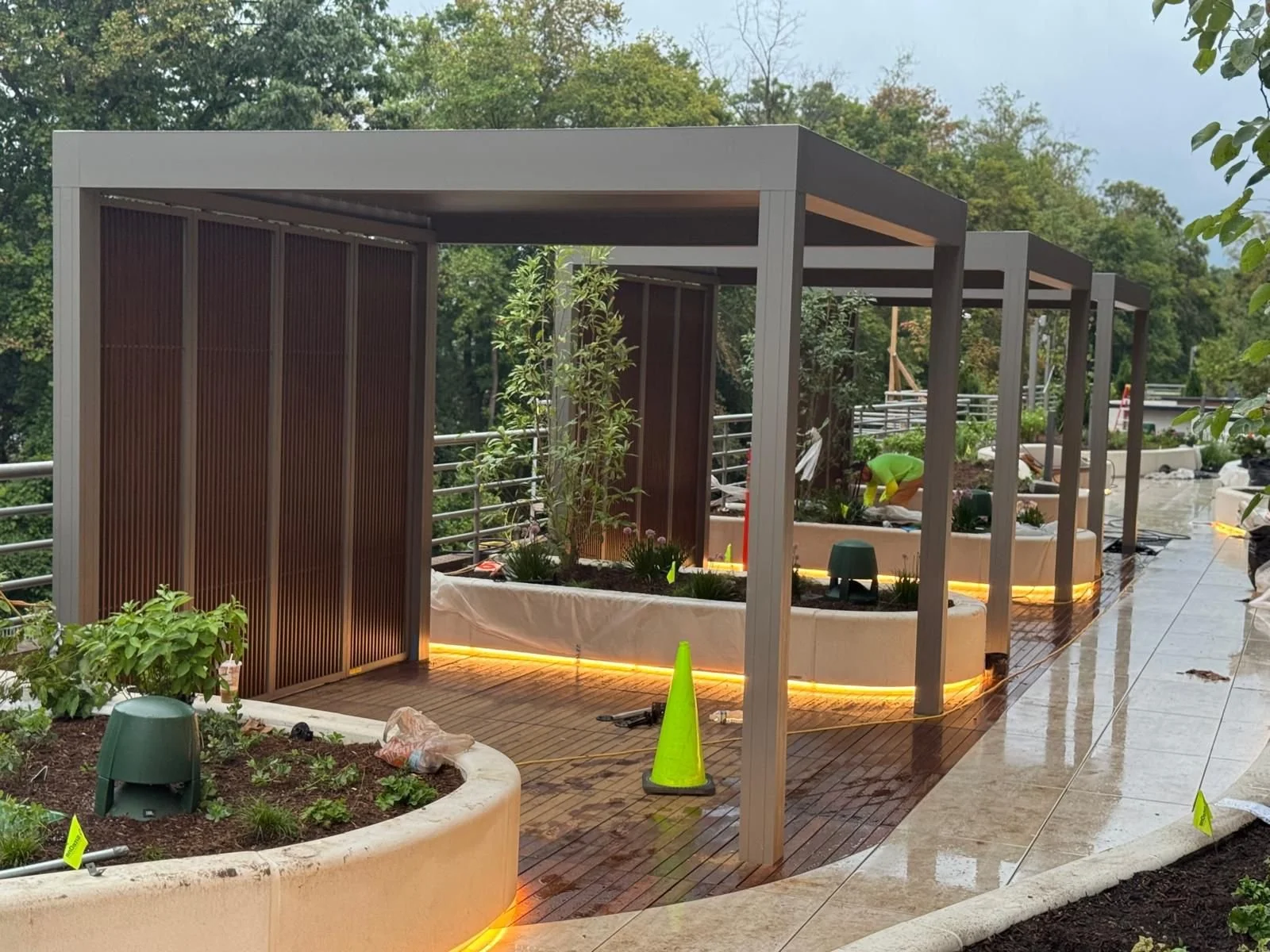
For this Arlington, Virginia project, USSI installed a series of modern pergola structures along a landscaped commercial terrace. Each structure needed to sit naturally within an already detailed environment that included finished decking, curved planters, railings, lighting, pathways, and planted areas.
The work could not be approached as a collection of unrelated structures. The pergolas needed to read as one coordinated installation, with consistent positioning, clean sight lines, and spacing that worked with the surrounding architecture and landscaping.
One pergola being slightly out of line might be difficult to notice. Several pergolas repeating the same line will point out the problem immediately.
This was not a project where “close enough” would disappear.
Repetition makes precision more important. When several frames, columns, roof sections, and privacy panels are viewed together, the eye naturally compares them.
A post that is slightly out of position can affect the roofline. An inconsistent gap can interrupt the visual rhythm. A privacy panel that does not sit correctly can make an otherwise finished structure look incomplete.
The installation therefore had to be considered both one component at a time and as part of the complete outdoor space. Every measurement had consequences beyond the piece being installed at that moment.
Layout verification
The position of each structure had to work with the decking, planters, pathways, railings, and the pergolas installed beside it.
Component staging
Posts, beams, roof sections, panels, hardware, and tools needed to be organized without overwhelming a limited outdoor work area.
Careful assembly
Each connection had to support the structure while also preserving the clean architectural finish expected from the completed installation.
Final alignment
The structures, rooflines, privacy panels, and surrounding finishes had to look consistent when viewed from multiple directions.
Outdoor installation rarely happens in an empty field.
Specialty outdoor projects often take place inside environments where many surrounding finishes are already complete. On this Arlington project, the installation area included finished decking, curved concrete planters, landscaping, lighting, drainage areas, and pedestrian routes.
Those details create boundaries around the work. Materials cannot simply be placed anywhere. Tools and hardware need to remain controlled. Finished surfaces must be protected. Access has to stay organized so the installation can continue without creating unnecessary damage or disruption.
The wet site conditions added another real-world challenge. Moisture does not change where a pergola needs to stand, but it makes housekeeping, footing, material handling, and awareness of the surrounding surfaces even more important.
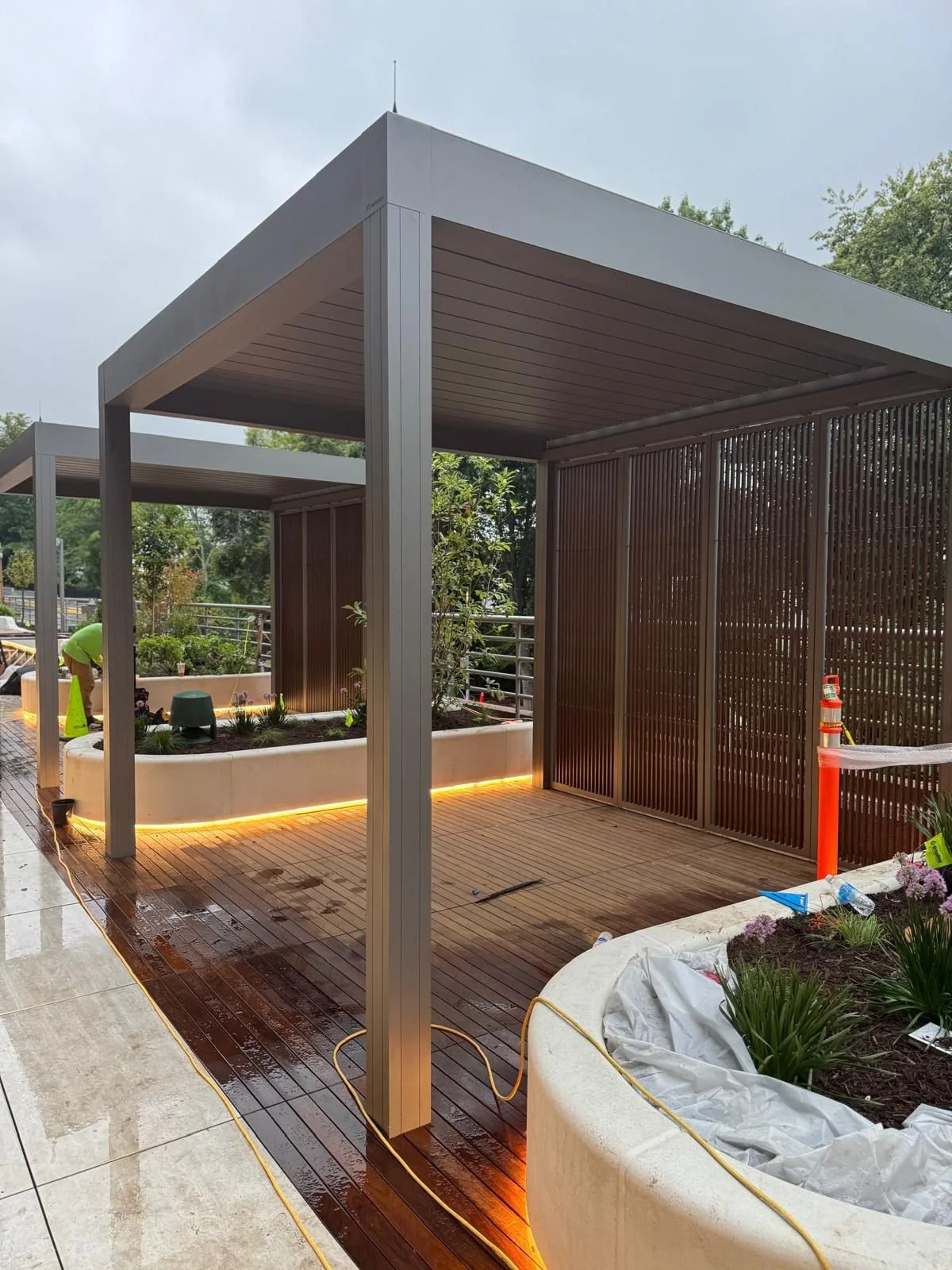
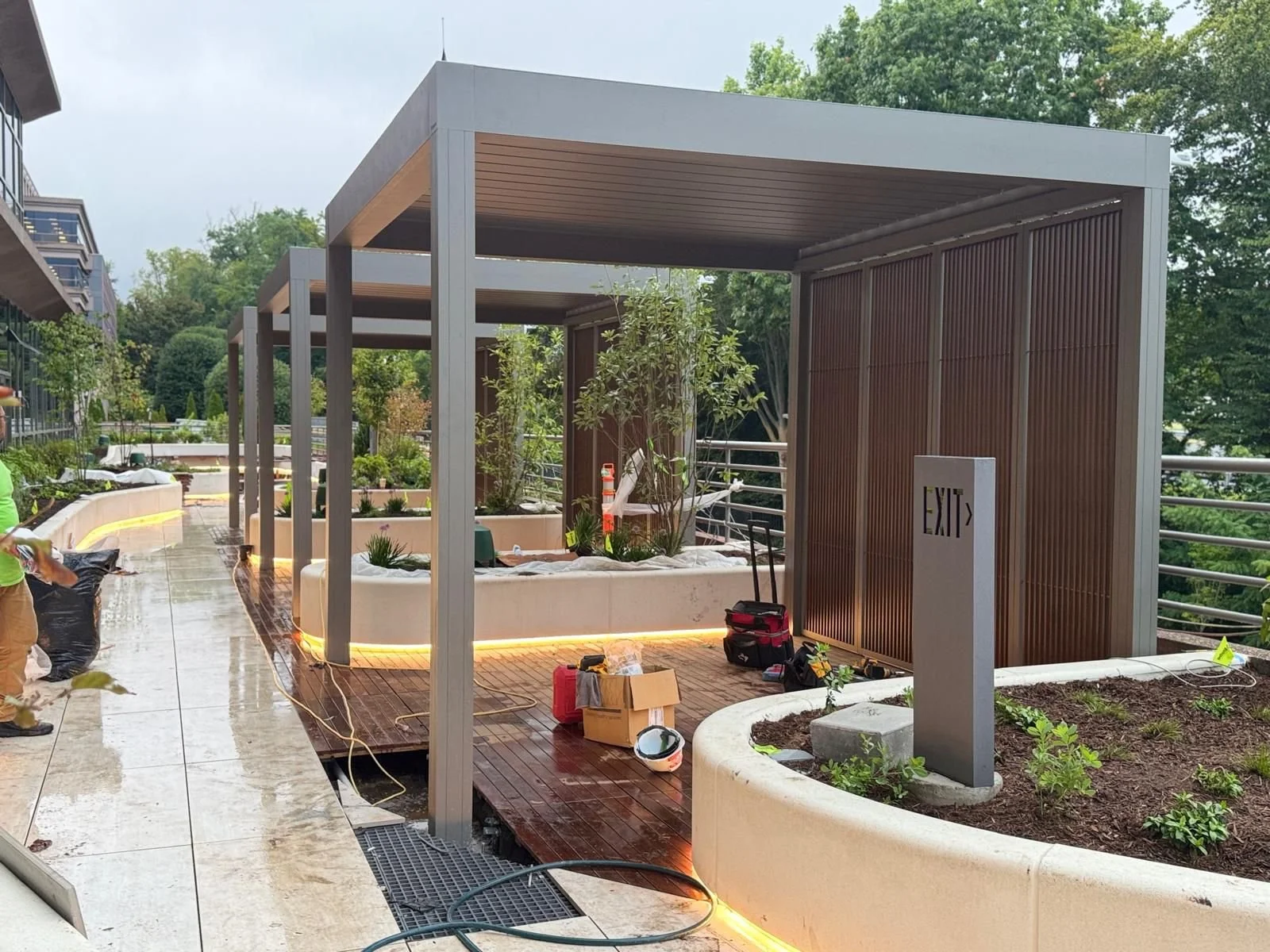
Precision is not only about keeping the structure standing.
Structural stability is essential, but it is only one part of a successful pergola installation. The client also sees the spacing, proportions, alignment, panel placement, finish quality, and how naturally each structure fits into the space.
On a project like this, the pergolas are not separate from the design. They become part of the architecture and landscaping. Installation quality therefore directly affects how the entire outdoor area looks and feels.
Clean installation allows the structures to look intentional rather than added as an afterthought. It helps the finished space feel calmer, more usable, and properly connected.
Roy’s field takeaway from projects like this is straightforward: measure for the final line, not only for the next component.
The USSI takeaway.
Pergolas have nowhere to hide. Long rooflines, repeated structures, open sight lines, and changing daylight make inconsistencies visible.
The best result comes from slowing down at the right moments: confirming the layout, checking the alignment, protecting surrounding finishes, organizing the work area, and making adjustments before the next component locks a mistake into place.
This Arlington project is a good example of what USSI brings to specialty installations across Northern Virginia and the wider DMV: practical field coordination, careful execution, and attention to the details that make a finished structure feel like it has always belonged there.
Pergola installation questions.
Why does pergola installation require such precise layout?
The position of the posts affects the beams, roof sections, privacy panels, clearances, and overall appearance. When several pergolas are installed together, differences in spacing or alignment become even more visible.
Can pergolas be installed within a finished landscaped space?
Yes. The installation requires careful material staging, surface protection, access planning, and coordination around decking, planters, lighting, drainage, walkways, and planted areas.
Does USSI install pergolas in Arlington and Northern Virginia?
Yes. USSI supports pergola, architectural product, commercial furniture, and specialty installation projects throughout Arlington, Northern Virginia, Washington DC, Maryland, and the wider DMV region.
Planning a pergola or specialty commercial installation?
USSI supports commercial pergola installation, architectural products, furniture installation, receiving and delivery, relocation, reconfiguration, and other specialty installation projects across Arlington, Northern Virginia, Washington DC, Maryland, and the wider DMV.
